
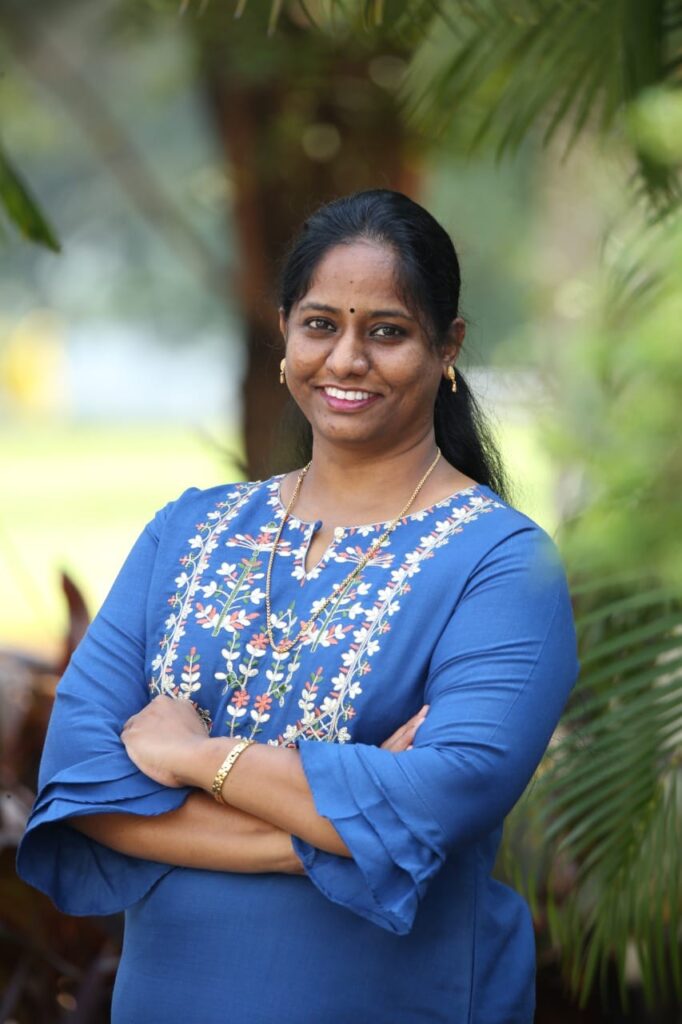
Mary Vinodhini, Curriculum developer, describes how Universal Design for Learning (UDL) is a teaching approach that helps all students learn by removing barriers in the classroom. It employs flexible methods, allowing every student, regardless of their learning style or ability, to participate and succeed. UDL is not just for students with special needs—it supports everyone. Mary Vinodhini discusses the various ways to present lessons and help students demonstrate what they know in a manner that works best for them.
Our core focus this year was simple but profound: to make every teaching and learning experience impactful and successful for every single learner in our school. The vehicle for achieving this goal is the Universal Design for Learning (UDL) framework.
I anticipate the question from my team: ‘What is UDL, and is this another new program? And it gets right to the heart of what we’ll be exploring. While UDL stands for Universal Design for Learning, the name only hints at its profound impact.
Instead of thinking of UDL as another program, let’s think of it as a transformative framework. The goal of this framework isn’t just to help students overcome barriers; it’s to design our learning environments so those barriers don’t exist in the first place.
It is not an approach only for students who have exceptional abilities or learners with special needs, but it addresses the requirements of all students in the classroom. This concept was basically developed by the National Centre on Universal Design for Learning and the Centre for Applied and Special Technology.
Ronald Mass designed the concept from North Carolina, envisioning the idea with reference to architecture. It started with building architectural designs. The designs in architecture offer accessibility, such as a ramp in front of a building, which is useful not only for people in wheelchairs but also for people who find it difficult to climb stairs, parents pushing strollers, or travellers with heavy baggage. In the same way, automatic doors should be designed for people with mobility or motor issues, as well as for those who carry a lot of baggage or those who do not want to touch the knob during flu season. We all must have observed the captions on the TV to meet the needs of people with auditory difficulties, as well as for people in places like restaurants and airports where the noise is high. They can follow the instructions easily. All these are meant to reduce the difficulties people may face in order to reach an object or a place. The same concept can be applied in the learning environment in the classrooms, too.
Inclusive and flexible classrooms
The Universal Design framework has three different principles – engagement, representation, and action and expression. The goal is to make use of different teaching methods to give all the students equal opportunities to succeed and to remove any obstacles during the process. Teachers can fruitfully help diverse groups of learners by following flexible methods and helping them access information and showcase their knowledge. The teachers can bring in flexibility for every student’s strengths and requirements. In this way, UDL helps students in the classroom. Talking about the first among the three principles, engagement, UDL encourages educators to find out various ways to motivate the students, such as letting them make choices, giving assignments relevant to life, and in this way, they can kindle the interest in the students and sustain the same. Skill building and creating opportunities for students to move around the class, providing the information in more than one format, such as textbooks, which are the primary visual source, etc. Providing text, audio, video, and hands-on learning offers all the students a chance to reach out to the material in any way best suited to their learning strengths. UDL encourages students to collect materials and to show what they prefer. They can opt for a pen and paper test, or oral presentation, or group research work.
It was encouraging to hear colleagues say, “We already do this.” It shows they recognize the core goal of supporting diverse learners. They were absolutely right that UDL shares the same ultimate mission as Differentiated Instruction; however, there is a fundamental difference in when and how the planning occurs.
● Differentiation is a responsive approach: A teacher modifies instruction or assessment (the materials, process, or product) after a lesson is planned, based on an individual student’s identified need.
● Universal Design for Learning (UDL) is a proactive framework: We design the curriculum and learning environment from the very beginning to be flexible enough to meet predictable learner variability.
For instance, if we can compare UDL to designing a garden, we can say it is about creating a flexible and suitable environment from the beginning. We design smooth and wide paths accessible to all, including those who have issues. We can grow a variety of plants, multiple resources to lay our hands on the information about things through text or pictures, or auditory methods. To put it in a nutshell, UDL is all about building flexibility in the learning environment proactively. It helps all types of learners to access information. It is designed well before delivery.
Beyond one-size teaching
Differentiated instructions are like providing personal care according to the needs of each student. It may need extra efforts and exposure to a better scenario. It is more of a personalized attention to individual learners. Universal Design for Learning is very important in the classroom as all teachers have a common goal, which is to provide the best possible learning exposure to students to achieve greater academic outcomes. Achieving these goals is not very easy but very challenging, as the educators have to cater to diverse classrooms with students with different aptitudes and learning styles. UDL helps educators identify the potential of all students and ensure equal opportunities to succeed. The educators will use a variety of methods and materials in their teaching to help the students engage with materials best suited to them to learn more, take an active role in the classroom, and be independent learners. The students are allowed to take ownership of their learning by applying these principles in the classroom. By incorporating these principles in the classroom, the educators get a better focus on their goals. The principles help the students create their own learning goals by guiding them with a larger focus on variability. Flexibility in options is introduced into the lessons for all students, and the educators make use of various tools and resources to work towards the goal that involves curriculum goals, assessments, and materials. UDL encourages educators to design lessons to better engage students. It is important to note that not all the principles are incorporated at one go in one lesson. The educators can wait to see how it makes a difference. Yet the accommodation for individual students remains the same in the classroom. UDL analysis of each student’s learning profile, irrespective of the differences, reduces the barriers and helps students engage in learning through the use of technology. Technology has an important role in the UDL classroom. We need not make use of all three principles at the same time. We can focus on representing the content rather than reading out from the textbook or by means of a lecture. We can opt for a variety of ways to deliver the same content, such as video, and keep them engaged. In this way, we can see the difference in each student, be it a child with special needs or a slow learner, or one who is unable to sit for a long time to listen to the lecture. They can have a look at the other sources to learn the content.
Assessments differ from student to student, but the objective is the same. In UDL, the goal is not differentiated. This is the main difference between UDL and a differentiated classroom. In a differentiated classroom, we differentiate the content, process, product, and environment. But in UDL, the goal is the same. We know what we want to achieve, plan accordingly, and it is a delivery before the design. I have heard teachers say that they have tried differentiated instruction for students with special needs. There is no control in the classroom, but when they start working on UDL, giving the ownership to the students for their learning, the educators can see the difference. It is indeed a challenge, but by implementing these, we will know how the student transforms.
Tech tools, smart learning
Technology provides a variety of cutting-edge tools that can be used by an independent learner or for group tasks. Apps like Kahoot can support formative assessments, facilitate active student learning, and also deliver content. A variety of tools exists to serve these diverse purposes. Tools such as Read&Write, EdPuzzle, Nearpod, and MindMeister offer information in varied formats, providing alternatives to standard print and lecture. Flip (formerly FlipGrid), Canva, Adobe Express, Google Docs Voice Typing, and Screencastify give students varied options for demonstrating what they know beyond traditional writing or exams. To capture student interest, offer choice, and sustain effort and persistence, tools such as Padlet, Jamboard, and Google Classroom are very effective.
Project, purpose, progress
Project-based learning involves a group task, students choosing their projects, but with no choice on how to present the project or the tools they can use. So, UDL and project-based learning help each other. Feedback is a strategy that comes in handy. The students take ownership of learning, responsibility to meet goals, and the teachers give feedback. This is a key to a successful UDL classroom. The feedback should be given immediately so that the progress of the student is clear to the educators. Standard assessment is the end product, but UDL prepares them for that end product. We prepare the students to face the world with skill-based learning. When we have formative assessments in the classroom, we give the students the ownership to meet the goal. It is the pedagogical approach that is different. When leaders and educators believe in and commit to this approach, the difference between UDL and traditional teaching becomes clear. We can make use of the same resources available within our community, along with technology. We have to understand the requirements of the classroom, the variability of learners, and how to achieve the goals in the classroom. Success is achieved when the entire class works collaboratively toward the shared learning goals. It will be a great success if the entire class works towards achieving the goal. Using the principles one by one, working on the major focus for the class, engaging the students in the content, sharing the content with the students, and achieving the objective of the class. The teachers should come out of the traditional approach of teaching and learning to meet the needs of all the students in the classroom; they should not focus on only the slow learners or ones with learning disabilities. The main challenge is planning at the right time, lacking clarity on the focus, the expectation of classroom expectations, and the lesson plan. If there is no clarity, it leads to failure. UDL plans are made before delivery. So, we need to start the UDL approach from the beginning and not after the lesson plan. Only then can we go ahead with the UDL framework.
This is a summary of the talk given by the author on schoolreformer.com
Contact details
Mary Vinodhini
Pedagogical Leader and Curriculum Developer
Email: vinodhinimary@gmail.com
Mob:9676972964