
In a world where academic achievements often take precedence, the significance of emotional intelligence (EI) is frequently overlooked. The education system has long emphasised grades, examinations, and performance metrics, but true success extends beyond intellectual ability. As one child psychologist and emotional intelligence coach emphasises, without emotional balance, learning and performance lose their foundation. The growing recognition of emotional intelligence in the classroom is not just an educational reform; it is a human necessity. Especially after the COVID-19 pandemic, schools have witnessed a surge in emotional and behavioural challenges among children. These challenges have revealed an urgent need to integrate emotional awareness and regulation into education systems globally.
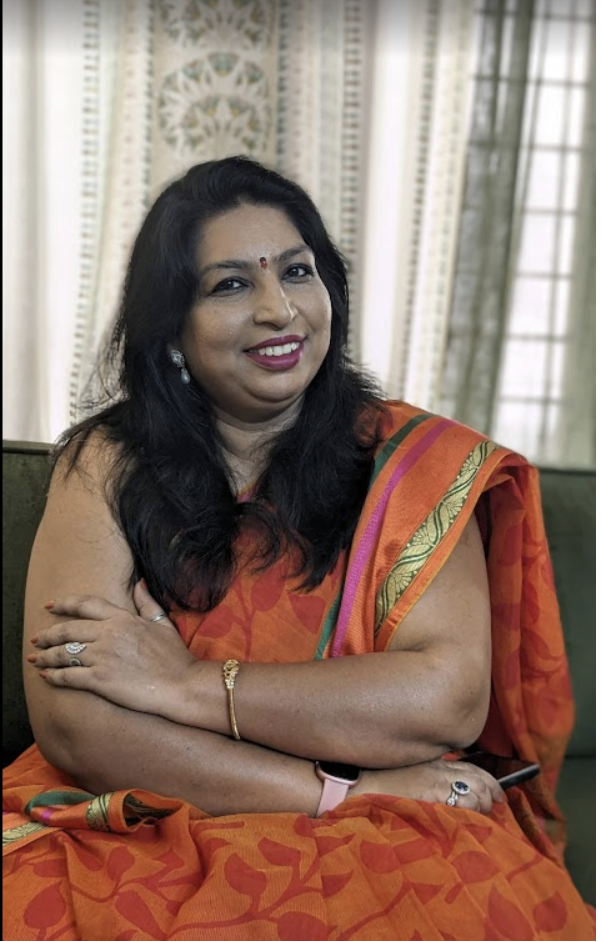
According to Archana Madhusudan, Academic Director, Sun Jupiter International School, Bangalore, education is not just about grades and examinations; it is also about preparing students for life. Emotional intelligence helps children recognise their own feelings, understand others’ emotions, and respond thoughtfully. By nurturing emotional intelligence in classrooms, teachers can create a space where learning is not only intellectual but also emotional and social.
For long, the focus of education has been only on intellectual pursuits — memorising facts, scoring high marks, and excelling in examinations. However, the emotional well-being of students, which plays an equally critical role in their overall development, has remained completely neglected. Most of the focus is on marks and grades, and we have never worried about emotional intelligence. A child might perform exceptionally well academically, but if he is internally distressed or anxious, that performance will eventually go down. The educator points out that emotional disturbances hinder not only learning but also execution and decision-making. Historically, emotional expression was often dismissed as adults rarely empathised with children’s feelings, and youngsters were told to “shut up and listen.” Such responses led generations to bury their emotions rather than express them healthily. Over time, this suppression resulted in adults who are actually individuals afraid of offending others, and those who bottle up emotions, eventually bursting out. The terms depression and anxiety were seldom heard of in the past, but today, even children as young as five or six seek counselling for these conditions. It is surprising and painful to note that a child of five or six years has anxiety, and the reason is the lack of emotional control. Emotional development, she insists, must be prioritised not only in classrooms but also at home.
Behaviour starts with adults.
Teachers today face a unique phase of challenges. With more and more single-child families coming up, children often grow up without learning the values of sharing, caring, or compromise. They are pampered a lot, as per her observation. As a result, when they enter the classroom environment, they struggle to adapt and regulate their emotions, leading to behavioural disruptions. One of the most striking examples she provides concerns the simple act of saying sorry. Today’s children do not say sorry, she points out, even when we ask them to apologise, they refuse. Maybe if we ask for something very hard, they will happily give it. But they will not say ‘sorry’. This reluctance stems from the lack of emotional education at home and school. The act of sincere apology — one that signifies self-awareness and empathy — must be practised by adults before teaching the children. “Children are wet sponges; they absorb everything,” she notes. “They are mirrors. They reflect whatever they see.” A teacher or parent who exhibits calmness, kindness, and emotional balance sets a standard for children to follow. In contrast, aggression or impatience from adults often manifests as disruptive or dysregulated behaviour in children. So, emotional intelligence cannot merely be taught; it must be demonstrated and adeptly followed by the elders.
Teaching calm and compassion
When children start learning about emotional awareness, they become more self-regulated and empathetic. They begin to realise their feelings, recognise emotional triggers, and apply techniques to manage them. The psychologist explains that emotionally intelligent children can identify physical signs of distress — such as quicker breathing, clenched fists, or a racing heartbeat- and they consciously regulate these responses. They understand they are getting angry and want to know how to calm down. Regulation comes with simple practices like deep breaths or backward counting. These children are also more empathetic; they notice when peers are upset and offer help. “That is what fosters bonding between children,” she adds. “It also makes children kinder. The world requires more kindness today.” In her work as a neuroscience practitioner, she introduces teachers to the concept of amygdala hijack — a state where emotions overpower rational thinking. “When your thinking brain is not operating, you act purely on emotions,” she explains. “Later you regret and say, ‘I didn’t mean that.’” Teaching children how to recognise and prevent such emotional hijacks can change their social interactions. One memorable classroom incident beautifully explains this principle. During an activity, a child accidentally broke another’s pencil. The affected child, furious and fuming, began to shout. But before the situation escalated, a little girl calmly said, “Rohan, that is amygdala hijack. We need to do backward counting.” She counted aloud from ten to one, guiding him through deep breaths. By the time she reached one, the boy was calm. He simply asked, “Why did you break my pencil?” The other child apologised, and the conflict was peacefully resolved. It was this incident which reinforced that — when we teach children something at this age, they internalize it effortlessly. It was a beautiful example of how emotional intelligence helps regulate behaviour. Such moments reveal that emotional intelligence is not just a theory; it is a practical life skill that nurtures maturity and compassion.
Mastering emotional balance
While children benefit immensely from learning emotional intelligence, adults should also develop it. Everyone needs it, the psychologist asserts. The first step, she says, is acknowledgement — understanding one’s emotions without denial. Adults do not try to process their own feelings and just brush them under the carpet until one day when the volcano erupts. They just tend to overlook or avoid it. They were never encouraged (in their childhood) to show or express emotions, which is a sad state of affairs. “Being human” means experiencing a wide range of emotions — happiness, sadness, anger, and frustration. The goal is not to suppress them but to regulate them when needed. She advises mindfulness: “When you realise, ‘Yes, I have lost it,’ you can pause, take deep breaths, compose yourself, and go with the flow.”
A simple and yet powerful technique she recommends is smiling. Drawing inspiration from the famous Bollywood film Three Idiots, she refers to the mantra ‘All is well’ which goes to explain, “You are telling yourself there is nothing that will bring the world to an end in this situation. Calm down. This too shall pass.” She warns that during emotionally heightened states, individuals often make impulsive decisions or say things they later regret. This is particularly worrisome in cases of anxiety, depression, and the alarming rise in student suicides. “Why are children not understanding that if I fail today but try again, I may succeed tomorrow? If my life is gone, it’s gone forever,” she laments. “Why doesn’t this generation have that resilience? Because of the lack of emotional intelligence and the hypersensitivity that they exhibit from a very young age.” Mindfulness and emotional labelling are keys. “When you’re angry, your head is hot, your eyes are hot, your stomach clenches. Identify where you are feeling that emotion,” she explains. “Once you label the emotion, you know how to handle it.” These self-awareness practices allow adults to handle emotions with composure and empathy, setting a strong example for children.
Empathy as everyday practice
To truly include emotional intelligence in society, it must be cultivated in multiple environments — schools, homes, and workplaces alike. Awareness campaigns and structured programmes can help in this development. “In schools, it is quite simple,” she notes. “You can organise social and emotional learning sessions for children, and similar lessons for educators.” She also highlights its growing importance in corporate settings, which is equally hectic and stressful. “When I conduct soft skills training, one of the most opted topics is social and emotional intelligence.” Teaching these principles to adults enables them to manage pressure, communicate effectively, and lead with empathy. The ultimate effect is profound. When children learn emotional intelligence, they take those lessons home and influence their families, too. Parent orientations, she suggests, can play a major role in spreading awareness. Parents need to understand to focus on this. She illustrates this with a relatable example — when a child returns from school, the parent’s first words matter immensely. Instead of asking “How was your day?”, many parents begin by saying “ keep the socks in their place” or by checking the lunchbox. She explains that the child starts feeling, the socks and shoes are more important to his mother than him. Emotional connection, not correction, should come first. “Once you explain with empathy, the child will never repeat the behaviour,” she adds.
Parents must understand that children are not extensions of themselves but independent beings with thoughts and feelings of their own. “Your child was connected to you through the umbilical cord as an infant,” she says. “Once the cord is severed at birth, he is an independent human being. Not that as he’s a child, he will not understand — he will understand everything.” Children remember emotional moments more vividly than material gifts. “Even long after they have grown, they remember that one episode when they needed you emotionally, but you weren’t there,” she says. Parents often prioritise responsibilities over presence, missing events that hold deep meaning for the child. “You may give them 101 things, but they will remember — were you there when they needed you?” She shares stories of children disappointed when parents skip performances or ceremonies due to work. For the child, those moments represent validation and love. “Your meeting means nothing to the child,” she stresses. “When you do everything for your child, look at what the child needs, not what you want to give.”
Home: the first classroom
Emotional intelligence begins at home, and parents must consciously nurture it. “Charity begins at home,” she reminds. “We were never taught emotional intelligence. Our feelings were never considered when we were children. We were always told to be quiet and not ask questions.” Modern parents have this chance and awareness to break this cycle — to raise emotionally aware, confident, and empathetic individuals. She recounts a personal experience that goes to explain this lesson. “As a child, I always wanted to be a doctor,” she recalls. “When my daughter scored all A’s in Grade 10, I decided she would be a doctor.” However, her daughter, emotionally intelligent and self-aware, confronted her: “Mama, you want me to study medicine because you couldn’t be a doctor. I will do it if you want, but my heart is not in it.” That moment, she says, transformed her understanding of parenthood. “I learnt the hard way that every child has an independent thinking brain. We must acknowledge their feelings and support them, not push them into directions we desire.”
Emotional intelligence is not an optional skill — it is a foundation for healthy human development. It shapes behaviour, relationships, decision-making, and resilience. As the psychologist eloquently states, “Many of these issues can be resolved very easily if emotional intelligence is made an integral part of our culture.” Integrating emotional intelligence in classrooms, homes, and workplaces ensures that individuals are not only academically competent but also emotionally balanced, empathetic, and resilient. It is through this balance that true education — the education of the mind and the heart — can be achieved,” she concludes.
By teaching children to recognise their emotions, regulate them, and empathise with others, society can nurture generations that value kindness, understanding, and self-awareness. Emotional intelligence is not just a classroom lesson; it is a lifelong asset — one that empowers individuals to connect deeply, think clearly, and live meaningfully.
This is a summary of the talk given by the author on schoolreformer.com
Contact details
Archana Madhusudhan
Academic Director, Sun Jupiter International School, Bangalore, Karnataka
M: 9010280212
E: archanacorporatechanakya@gmail.com