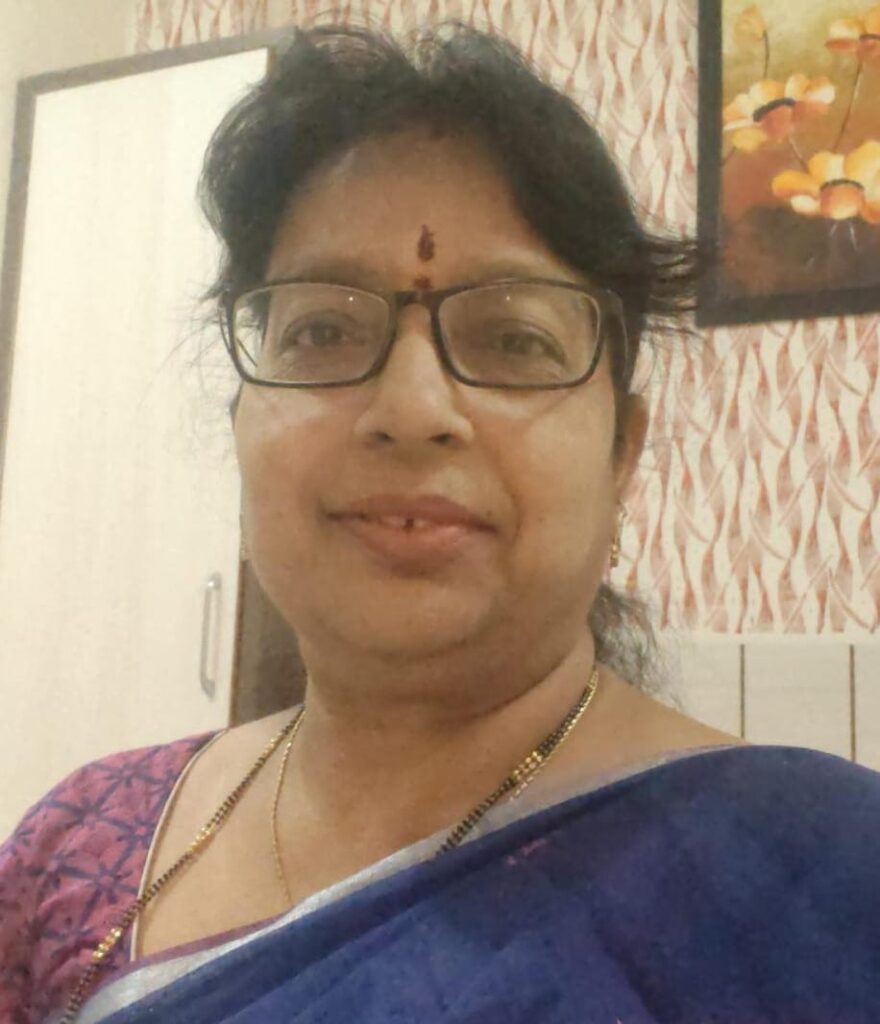
Aruna K. Srikanth, Resource Person, Next Education, Hyderabad, Telangana, describes a passionate teacher as someone who nurtures curiosity and celebrates each child’s progress, no matter how small. Their classrooms are supportive spaces where students feel confident to try, fail, and grow. Through their dedication, they help children develop both academically and personally.
The teaching profession is just like a whirlpool where teachers are attracted either by choice or by chance. But the teachers who stay, not just for salary or comfort, remain because they are passionate. So, when we say being a passionate teacher, we mean a teacher who is not joining the teaching industry for a comfort zone: limited school timings, multiple holidays, and an easy balance of work and home. Should we join the teaching field for that? Definitely not.
A passionate teacher is one who inspires hearts. The role of a mother is played by the passionate teacher. The way a mother encourages her children, usually one or two at home, we do it for hundreds. Not only inspiring but also empowering them. We get them ready not only academically but also worldly wise; we prepare them for the world. How? By being passionate. The word itself shows how intensely articulate we should be in our heart, body, and soul we should be to get children interested in us.
It is not a place where we are called and go to work simply for the sake of a salary. It is not just a profession; it is a calling that comes from within. Not every qualified person with a B.Ed. or M.Ed. can be a teacher. It has to come from within. Simply reading out what is written on the board or in the book is not helpful for a child. How that material is transmitted in the form of blood is necessary. That is a calling. We should be enthusiastic about teaching—more so about learning. As students, what we learned was just 25 per cent. But once we started teaching, we must have seen that the more we learn practically, the more efficiently and effectively we teach our children.
So, where is our investment? Not in awards, rewards, merits, or accolades given by the management, but in the student’s success. When one child comes and says, “Teacher, it is because of you I am here,” that itself shows we are successful. How can we do that? By building strong relationships with students. It is not like giving chocolates or gifts and expecting obedience. Definitely not. We continuously seek to improve our subject knowledge. Automatically, children start getting attracted to us because we have subject mastery, and in a very loving, empathetic manner, we reach out to the child. This builds a strong relationship that, in turn, makes the child successful.
Listening builds trust
Create an engaging and dynamic classroom environment. A teacher should not rely only on one-sided talk. Sometimes, for recordings, it may be required, but truly effective teaching happens in an interactive session—when the teacher asks, children answer, children ask, and the teacher answers. Such engagement creates enthusiasm because children feel, “Here is a teacher who listens to us.” As seen in the NEP guidelines, communication skills begin with listening. The more the teacher listens to students, the more children become interested in sharing things in class. So how do we build that relationship? By getting connected to the child.
It is definitely a two-sided interaction. The table on this side is the teacher’s, and the table on that side is the students’. But the table is only a physical object. It is not a segregation of two sides. Only when the teacher comes out of that zone, steps away from the table, and meets children halfway, do children also come to meet the teacher halfway. That is when we build strong relationships. And when a relationship is strong emotionally, mentally, and even physically, the child gets attached to the teacher, and whatever the teacher teaches becomes locked in the child’s mind. The child moves fast with the syllabus because he understands his teacher.
And all that, simply by being a passionate teacher, we can transmit to the child. Think back to our memory lane and recall how we were as children. If a teacher walked by and her sari or dress touched us, the exhilaration, the butterflies in the stomach. But today, children rush, dash into teachers, and do not even say a simple sorry. Why has this gap arisen? Because teachers have become mechanical. Although there are challenges—completion of syllabus, work pressure—these make it difficult to incorporate passion. But despite all pressures, being a student’s teacher should stand on the other side of the balance. Once we define that role, the other tasks automatically become easier.
Empowering every learner
So, build strong relationships with students. How? Inspire them—not by shouting, not by punishment, but by encouraging love towards learning. Use play-way methods, activity-based learning, and strong interaction. Always sitting and writing is not necessary. A teacher has the skill to feel the pulse of the child. Once the teacher catches that pulse, she can easily transfer all the knowledge she has to her children. Inspire them, encourage them, motivate them, and leave them with a thirst to return for more in the next class. How is this possible? When children observe how dedicated their teacher is. Children today are very smart. They can see which teacher is truly committed and who only pretends. A teacher who takes that extra minute, that extra mile to help students goes a long way. Those teachers are valued. Children mirror dedication. They observe how hard their teacher works, and they fit themselves into the same mould. Whenever the teacher evaluates them, she sees improvement because they are trying to reflect her dedication.
How is this possible? Teachers need to improvise teaching practices. There are multiple ways, and each teacher has a unique way of reaching their children. That is the uniqueness of each teacher. Because it inspires and motivates students. They should desire the next class, long to be in their teacher’s classroom. This can be done by fostering dedication, enthusiasm, and motivation, so the child comes eager to learn. Create a positive learning environment. Let the child be inquisitive. Do not rush to give answers. Build curiosity. When a child is curious, he aspires to learn more. That is why passion matters. Many teachers have passion initially, but over time it is killed. Challenges in the classroom or school environment sometimes damage it. Difficult students may create problems. So how do we handle them? A teacher must devise methods.
Well-being fuels teaching
One major challenge teachers face is balancing workload. The NEP has tried to divide the syllabus into manageable forms so it is not taxing for children or teachers. Learning is no longer rote; it is analytical and logical. For this, teachers must practise self-care. Unless the teacher is happy, enthusiasm does not work. So, teachers, have our breakfast on time, do not shout, and avoid pressure. Then we can definitely be passionate. Here is to all teachers who walk into the classroom with a smile despite personal battles. I applaud teachers who go the extra mile—skipping meals, avoiding family functions, staying up late, coming early—so that the children in the classroom never feel the pinch of what the teacher is going through.
I never faced challenges with students. Every batch has naughty children. Each teacher has a unique way of dealing with them. Some children work when criticised—they want to prove themselves. In degree colleges, I taught tall, strong boys. If we begin strong with our subject, they listen. Subject knowledge earns respect. The real challenge is monetary. Teachers are underpaid. It is sad because teaching is the profession that creates all other professions. We get sandwiched between home and work, but once we enter the classroom, we forget everything about our children. Teachers must ask for fair pay. Know Our worth.
My English teacher in class ten was my motivator. I have not looked back since. I asked her, “What should I do to be a teacher like you?” Even today, I wonder if I have even touched her little toe. The way she transformed our entire batch was life-changing. That was when I decided I would be a teacher—and an English teacher. That passion still burns strong in me.
Adapting classroom methods
Empathy is important. Get to know our child. Make the child realise we are not someone towering over him, pushing him to get full marks. When we focus only on marks and subjects, the child switches off. Play-way methods help the child feel that he is learning something new in an activity-based way, which is the best way to reach out.
Grammar is a weak point for many students. Grammar is considered boring. They love stories and poetry, but not grammar. So I never announce the topic. I introduce it through activities—quizzes or games. When I say “game,” they are excited. I make four teams representing the four rows and start giving examples. I do not name the tense but give sentences and ask them to change the form. Their instinctive learning, from listening and exposure to media, helps them guess. Peer correction also helps. Teaching grammar through interaction, slides, and activities makes learning concrete and memorable.
Appreciation by children matters. I have been teaching for twenty-five years and will celebrate my silver jubilee this October. Teaching has no retirement. I take classes at home and online. When I do not teach, I feel unwell, as if something is missing. The greatest reward is when a student says, “Because of you, I am here.” Nothing is more rewarding.
If we are not updated, we will be outdated. Children today are more tech-savvy, especially after COVID. Teachers must also upgrade themselves. I am tied up with an education publishing house where we are trained in technology—Zoom, digital platforms, grammar exercises, Google tasks, and comprehension activities. Teachers are lifelong learners.
Lesson planning is a major challenge. Publishing houses provide plans, but we cannot stick to them because children are not columns and rows. It is the teacher’s calling. One chapter can be planned according to the classroom’s tempo. If children grasp quickly, move to the next step. No fixed rule. Combine the textbook, workbook, and grammar book so that one concept is reinforced across all. This avoids repetition and saves time.
Assessment is no longer only half-yearly and annual exams. NEP introduces recitations, practical learning, seminars, elocution, and daily evaluation. Every class is an assessment because the teacher observes how the child responds.
A healthy work environment is essential. Toxic workplaces affect health and performance. A family-like atmosphere, even in professionalism, helps. Share knowledge. Sharing is learning. My colleagues have shaped who I am today. Work-life balance does not end at school. We carry answer sheets, progress cards, and notes. A supportive family is crucial. Without it, managing both worlds is difficult. When both our families—home and school—support us, success is possible.
The speaker concludes saying, “A big clap to all my teachers for doing a great work of empowering minds, a candle lighting all the other little candles. Keep the work going on.”
This is a summary of the talk given by the author on schoolreformer.com
Contact details
Aruna K Srikanth
Resource Person, Next Education, Hyderabad, Telangana
Mob: 9290014511
Email: Arunasrikanth35@gmail.com