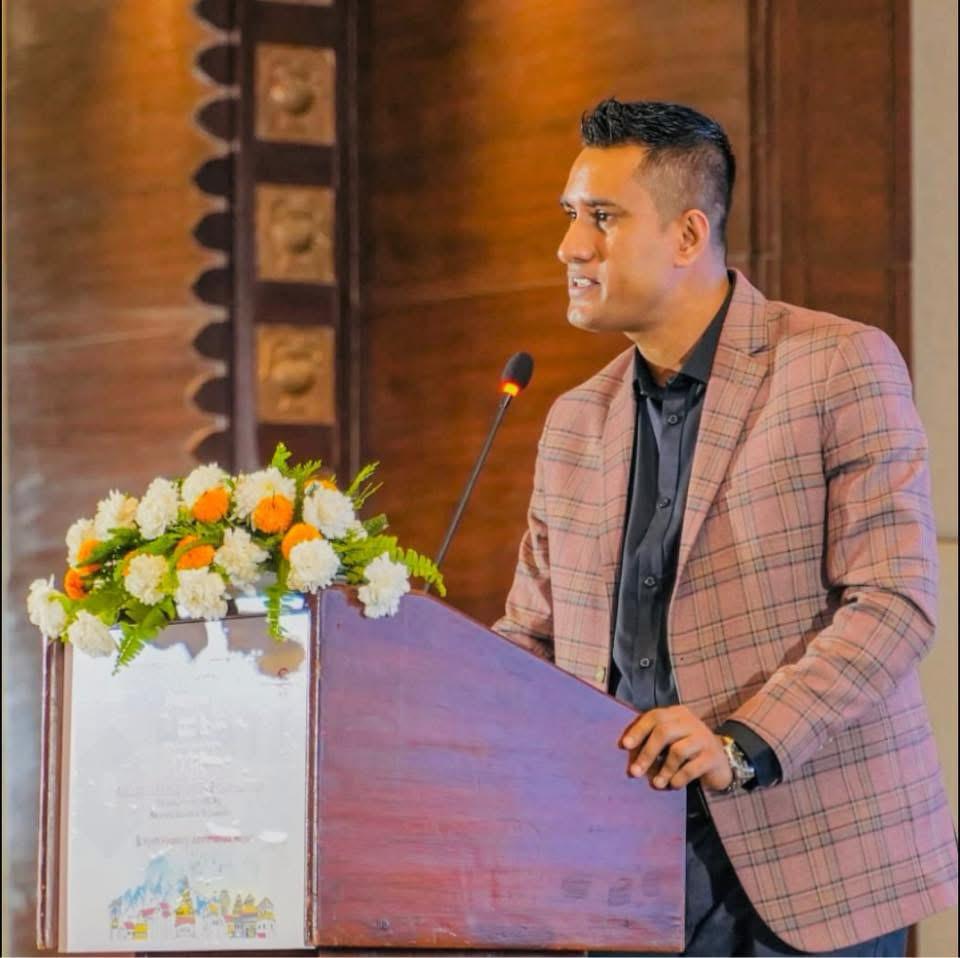
Rezuan Chowdhury, Head of Primary and PYP Coordinator, Smart Innovations School, Dhaka, Bangladesh, explains how assessment is more than measuring performance; it is a tool to support learning. It provides students with feedback that helps them reflect and improve. Teachers also gain valuable insights that guide their teaching strategies. When approached positively, assessment strengthens learning for everyone involved.
I have a wide range of experience of having worked in many schools during my 15 years in the education sector. 5 of my articles have been published across the world. The four objectives of assessments include understanding the concept of assessment as a tool for learning and growth within the IB PYP syllabus and finding out various strategies so that the assessments are interesting and purposeful, and let us know the students’ understanding. There are different types of assessments – formative, summative, and the roles of assessments have a great role in the students’ learning process. Design assessment helps in improving critical thinking, inquiry and concept-based understanding. These are the main objectives of the assessments.
When we utter the word “assessment”, the first thought that comes to our mind may be reporting, tools like anecdotal records, rubrics, and checklists to understand the learning level of students and their views. As per an educationist, “Assessment is not about marking”. In the current scenario of education, we are not keen on marking. We think that performance is all about understanding the learning level of the students. We have to take action according to their learning level so that they can move to the next level. So, assessment is meant to help us understand the learning levels of the students and not about marking. In the case of PYP, the assessment is a process to gather and analyse information so that students can improve their learning and information skills.
The different types of assessment include ongoing knowledge assessment. We get to know what the students already know about the lesson and concept. Next is the summative assessment is the combination of units. Next is the formative subject, which is for any subject. The purpose of the assessment is to understand what the student has learnt and can do. This is the first teaching strategy. Differentiated learning comes in when the classroom is full of diverse learners with various learning capacities. No two students are the same. The different types of learning include auditory, visual, and kinaesthetic etc. We have to classify the assessments based on their level of understanding, their ability, and their interest.
When we teach the concept of division, we should know how far they know about division, and we make them write a few sentences on division, their learning, and in which category of division they are in, and the various types of division should be shared. Students should be able to set goals for the future, next term’s exams, or the next unit. The students have to set goals for all subjects as needed at the end of the academic year. For effective assessment, it should be authentic, transparent, and should be student-centred. It is the duty of the teachers to give feedback after the assessment is done to the students. It should be a continuous assessment and not a surprise test alone. The teachers should note down the negative aspects of the performances. They should give special personal attention to the students who are not able to understand the lessons. We should sit with them, explain the concepts till they feel confident about them. There can be other strategies, such as a thinking routine.
Developing student accountability
The students should think about the self, peer assessment, and the rubric, and they should do a self-assessment. When they are doing projects in teams, they should assess the performance of their classmates who are working along with them, prepare, and present the projects in the classroom. In this way, we can teach the students to assess themselves and also their peers in a constructive way and offer constructive feedback. There can be a quick check of the understanding of students. We can use traffic signal lights, green, yellow, and red, for this purpose. When the student opts for green, it indicates they have understood the concept. Yellow indicates that he is confused about the topic, and red denotes that the student needs the help of the teachers. We can ask the students to write on a sticky note if they understand the concept of the topic we are going to start. Depending on the colour they choose, we can take action. We can also follow the think-wonder concept. We can ask the students what they think about certain artefacts. This is an open-ended question. In this way, we can involve students in discussions. When we design an assessment, we have to work on the students’ choice, ownership, and involvement. It is important that the students set their goals, assess if they are able to understand the concept, and give feedback to the teachers using the traffic signal lights.
Diverse assessment strategies
We can use Padlet, which helps teachers and students to get feedback from the students. We can prepare short quizzes using Kahoot or Quizzezz, and these apps are very popular among the student community, too. They can see their scores immediately by using Quizzezz. We can help them use Google Forms to have open-ended and closed-ended questions and share the link with them. We can get their responses immediately. We can make use of Jamboard, where the students can write the reflections after the assessment, self-assessment or peer assessment. I use differentiated assessment strategies and incorporate the same with multiple intelligences, such as kinaesthetic, interpersonal, personal, auditory, visual, linguistic, etc. We can choose any three or four learning styles and design the assessment based on that. The kinaesthetic students want to do the project work, linguistic learners want to read books and materials, and visual students who learn to watch videos. We can give open and closed-ended questions to the students to know about their understanding. Including multiple intelligences for assessment is a very useful strategy. The students should be given such choices when we assess them. We have to work on how to design the assessment based on the topic, for example, the human body, the ecosystem, and incorporate these with the multiple intelligences to create the formative or summative assessment.
I have designed one such assessment wherein I designed six different tasks for the students to pick one and complete it. I had a focus on visual, linguistic, interpersonal, logical, kinaesthetic, and musical. I picked these six learning styles to design the task. Based on the interest, the students will choose the task. Using their ability to complete the work.
Enhancing assessment through technology
There are various assessment tools like Padlet, Jumbonet, and they are very helpful for the students. They are eager to get the feedback after the assessment about their performance and to know how much they have understood the concepts. These apps are very popular among students to give their views. Using these, they can also create their own videos, upload them to Padlet, or write an article on various experiences and other topics to upload. AI and ML can be blessings. We can use AI to create various ideas based on principles and ethics. We should not encourage copying and pasting. We should use our creativity and ideas when we design the assessment papers. We need to work on generating new ideas that are very creative. AI will not know the understanding level, interest, and ability of our students, but we do. So we can get ideas from AI, but all these ideas will not suit all students. We should know how to add value, how to design the assessment, and add a human touch to it.
Student-centred assessment approaches
To handle the present-day students, the teachers have to be extremely creative. I ensure that for Grade 3, where I teach, the assessments should not appear the same to the students. They should know that we are creating the same pattern of assessment sheets. So, we need to know the various learning styles. We can even have an interview session where the students can prepare the questions. The present-day students do not want already prepared questions, and so they can be allowed to prepare the questions. They will take interviews and do surveys, go on a field trip, and they should be encouraged to write a report about their experiences during the field trip. This is one kind of assessment connected to multiple learning styles. Students love to go outside the school, observe, and write a report. So we can work on various methodologies to use multiple intelligences and be creative in preparing assessments.
The teachers should know the learning level and understanding level of the students individually. It will help the teachers to prepare different assessment papers. Our assessment papers should not be the same for all the students, as there are different learning levels. One student may be very advanced in learning, some may be struggling. And so, when we design a formative or summative assessment, we should bear in mind the different levels of students, and our task should be based on this. Otherwise, the children will be frustrated.
This is a summary of the talk given by the author on schoolreformer.com
Contact details
Rezuan Chowdhury
Head of Primary and PYP Coordinator at Smart Innovations School, Dhaka, Bangladesh
Phone Number: 0088 1319495278
Email: rchowdhury@smartinnovationsschool.com