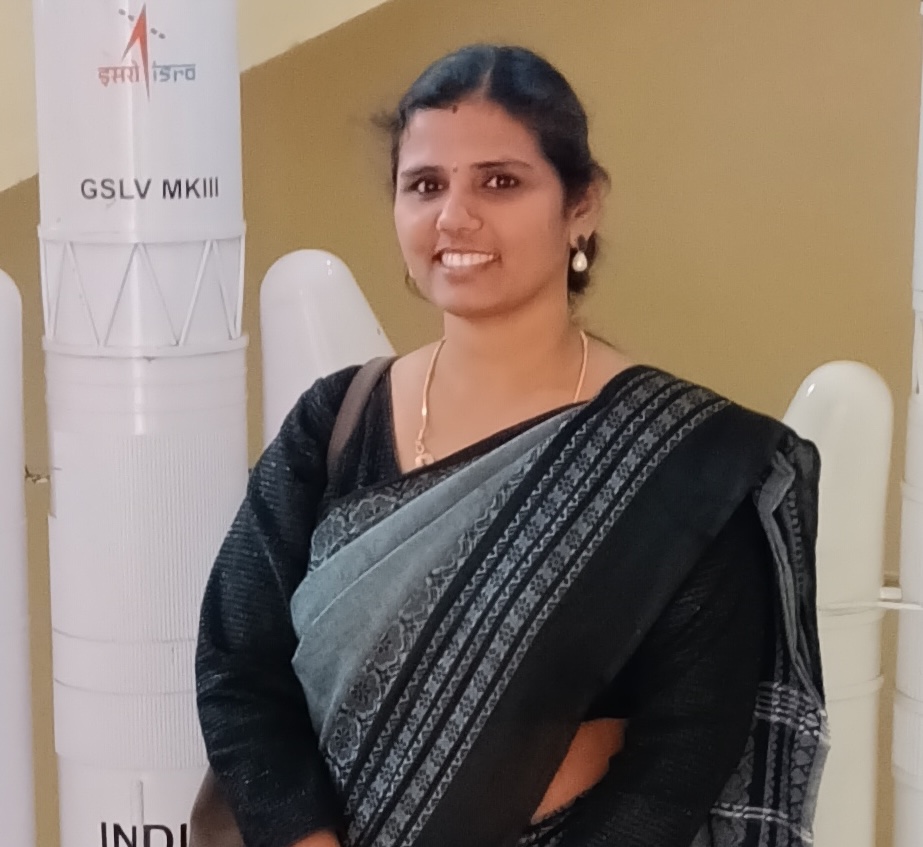
Sireesha Prasad, Founder of MITRAM EduServ, Hyderabad, Telangana, observes that in recent years, school curricula have become noticeably heavier and more demanding. Students are expected to absorb vast amounts of information within limited timeframes. This trend has sparked debates about the purpose and value of such extensive content. Examining the causes of overloaded curricula provides insight into the challenges learners now face.
As an educator, I have always been fascinated by the fact that when education is meaningful, joyful, and kindles the child’s curiosity, it happens very effectively. But students, teachers, and parents often feel that the education system is overburdened of late. It is always questionable if such a burden is needed, and if the students should be put to such hardships. Education is not just about how much they are taught but about what they are tuned into. Swami Vivekananda says that education is the manifestation of perfection already in man. This goes to the point that education is meant to bring out the strength of a student and to further develop in the areas of his interest. The student should never be loaded with content. Plutarch also says that the mind is not a vessel to be filled but a fire to be kindled. In today’s education world, under the name of education, we are only stuffing the brain with data, but we never allow them to understand or think.
Today’s education teaches us only to uncover less and to kill the curiosity to learn. We are in a constant race to be the first. This is the primary reason for the burnout of both teachers and students, and it also adds to the pressure on parents. The curriculum in the present day is adding a burden to the students under the guise of learning. We often hear the word ‘syllabus completion’ in most schools. As a result, students start their day with anxiety about how much they should cover rather than with curiosity to understand things. The parents are also helpless. When the students are forced to learn more, they become anxious, overwhelmed, and lose the purpose of learning.
We need to understand all about the curriculum, why it is introduced, and its purpose. Curriculum was created with the main intent of not to stress the children. The earlier Indian educational system basically focused on holistic development as it was experiential, focused on realities, and personalised. In Gurukuls, the students were taught basic skills and learnt life skills based on their interests. They learnt thoroughly what was purposefully needed for their life and were made self-sustained. But with more colonial education and globalisation, we started introducing a standardised curriculum, which does not suit everybody, as their strengths are different. They should be helped to use their strength to come up and not put him under immense pressure. This type of curriculum is meant to create rule followers rather than thinkers or creators. Today, we observe that children are very restless as they have too many subjects to cover and are not allowed to focus on one subject. They just brush through all subjects to get marks, which is a pressure put on them by educators, parents and the system. In our over-enthusiasm and zeal to be on par globally, we have added more subjects and topics. Of course, these subjects and issues are needed for the students to get ready to face the world. Without removing anything deemed unwanted, we have opted to add more. This has resulted in piling up of topics and adding to the pressure, and we have not given a thought to whether these are necessary for the students.
Many students have been introduced to the Abacus and Vedic math to improve logical thinking, mathematical ability, and mental ability. Also, they are conducting regular math classes. All three are meant to teach the students to do calculations perfectly and faster. Then what is the need for introducing one more subject that makes the students and teachers restless and tense? It would be better if all three were merged into one subject to make learning easy for the students and reduce the burden too. They will feel confident that they are learning more and faster. Many such situations make us wonder why we keep adding to the curriculum without removing anything old and not needed. Curriculum means running a course to guide a learner’s journey. But today’s curriculum looks like a race where students are forced to run fast and finish rather than learning, and they go without understanding anything. Today, students keep learning more subjects like computer, science, math, social studies, abacus, and also competitive coaching. I am amused to see that IIT coaching has started from class six in many schools, and in some even from the first standard. The schools take pride in announcing that they offer IIT coaching classes. At this age, the student is supposed to learn fine motor skills through drawing and speaking, but he will never understand what IIT coaching is. All these add to the students’ burden. I would also blame the parents, as they feel happy to let their children enter this harmful cycle without understanding the consequences. Ultimately, we prepare the students for nothing. Today’s child is not prepared to face problems in life; he gets stressed out as he does not understand by learning. He knows only how to reproduce what he has learnt in the examination papers.
As a result, we now see that the concepts are introduced to the children, but they have not been explored. He learns everything without understanding. A student may not get a chance to grow a plant, but he may have to learn about plants, the food pyramid, and deficiency diseases to get marks. Even as we speak about the overloading of curriculum, we know we should not do it, but it has become a necessity as holistic development needs diverse learning. Piling up the curriculum involves the extra subjects and curriculum that we make the children do. We think that logical reasoning and competitive coaching classes are needed to make the students think logically. We should know that drawing classes, robotics, and the abacus are also needed to make the children know about the outside world and prepare them for competitions. The current boards and systems need a wider coverage of content, which is needed to compete in the emerging trends across the world. The children should be aware of all of them. Since education has lost its purpose, it has become a burden. It is important that we make learning enjoyable for the students, but we have given the impression that education is about scoring marks in the examinations. It is a pressure not only for the students but also for the teachers, policy makers, and schools. By introducing more content, the schools want to win the race desperately. This has made all schools follow them, and the real sense of the curriculum is lost.
Nurturing natural curiosity
If we take a look at the textbooks, particularly math and science, from classes 6 to 10, we can find that many topics are repeated, helping the children learn stepwise, increasing their learning capacity, and ability to explore. This will not help the learner to grow except to get loaded with concepts. We should be focusing on the quality of education and not quantity. This is the main reason why students are unable to get expertise in anything. They may be scoring well, but in practicality, they will not do well. We are forcing them to do arts class, though some may not be good at it, and take up competitive classes even if they are not good at reasoning and analytical thinking. Due to this pile up of curriculum, students start experiencing stress, anxiety and feel burnt out. They lose the joy of learning. We are giving more importance to rote learning and memorising than being creative, which any child has innate. Nursery kids are so excited and keep asking questions, but when they are loaded with curriculum, we are putting out the fire in them. As curriculum implementation becomes part of education, we are turning it into a burden, and the purpose is lost.
We tend to ignore emotional well-being due to stress, and even adults face pressure due to excessive work. So, such overwork makes the children succumb to the pressure when we make them work long hours, no rest and no time to explore what they want to. They start feeling suppressed and become emotional. This is the reason why we have started having child counsellors and psychologists in schools. There is no time for the children to play, explore hobbies, and since we pay a huge amount as a fee to the institutions, we expect them to learn more without exploring them. We should introduce an education that connects the students to the outside world, not become bookworms, and memorise what they see in the books. They should be given a chance to explore things happening in the external world with a quality education and space. They should become thinkers. We should realise which areas the child is interested in, wants to explore, and guide them. He should be given the information on what he can explore and then be allowed to do it on his own. We need to help in building his competencies based on his interests, such as math, science, arts, or sports. We should explain to the children about the openings and find out their interests after they have explored the options.
Thoughtful teaching framework
Schools can play a major role in this process by checking the curriculum, training the teachers, and employing more trained teachers. This is very much required as the teachers are also facing pressure. The timetable and syllabus should be prepared according to the interests of the teachers and students, apart from parents, as they are also involved in the development of the children. The educators, who are the main pillars of the education system, have to speak up about things that are necessary and those that are not to be removed. They should provide guidance according to the interests of the students. They can continue with homework, assessments, examinations, etc. A well-designed curriculum is like a garden that gives freedom to explore. An overloaded curriculum is like a treadmill on which we reach nowhere. Curriculum is something that opens a child’s eyes to the world, and accordingly, it should be designed and implemented. We should not allow our children to be tired and stressed out by understanding the purpose of teaching and education.
Learning made experiential
The textbooks have all the plans for what should be taught to the students. To make them get higher marks, teachers just teach them; they do not get enough space and time to explore. They should use practical training to teach the children and make them understand better. They can use visual aids to give them real-life experience. They can kindle the curiosity in the children on topics that are lost now. They can use different classroom atmospheres, take them into the outside world, use visual aids, and different atmospheres to create curiosity. Once the students become open to taking more, teachers will find it easy to teach practically, students will understand better, and deadlines will be met easily. Montessori is doing the same thing. They teach the students according to their interests. Technology has a major role as it focuses on the students’ interests. It can be used as a basic tool to create curiosity. By using the technological tools, we can explain the concepts, they will get an idea of what they are learning, and they will get connected to the concept, making the teacher’s part easier. The understanding of the students is far better.
Exploration over memorisation
In many other countries, the education system focuses on building basic life skills rather than making students learn from textbooks. They learn about the real world, how to behave, to acquire knowledge, and to react to experiences. After 4th grade, the policy makers take into account the capacity and future trends and design the concepts accordingly to create curiosity and give them space to explore more. We have to change the examination pattern also, so that we do not make them first in the memory race. They should be good at life skills, understanding the concepts, and using them. Classic students also have practical examinations to explore what they have learned and exhibit their knowledge. These steps will bring a drastic change to the education system. Experiential learning can be made compulsory.
The subjects that are included in the curriculum should be implemented with a purpose. STEM programs in the school are more of a burden as teachers are forced to complete the portions. There should be no time limit for learning. Students should get time to learn and explore the concepts, and then move to the next level instead of having rote learning and memory-based examinations. Education should focus on the students’ learning what they need to improve themselves and explore. The educators should come forward to voice their views on this for the benefit of future generations.
This is a summary of the talk given by the author on schoolreformer.com
Contact details
Sireesha Prasad
Founder, MITRAM EduServ, Hyderabad, Telangana
Mob: 8186002121
Email: sirigannavarapu1993@gmail.com