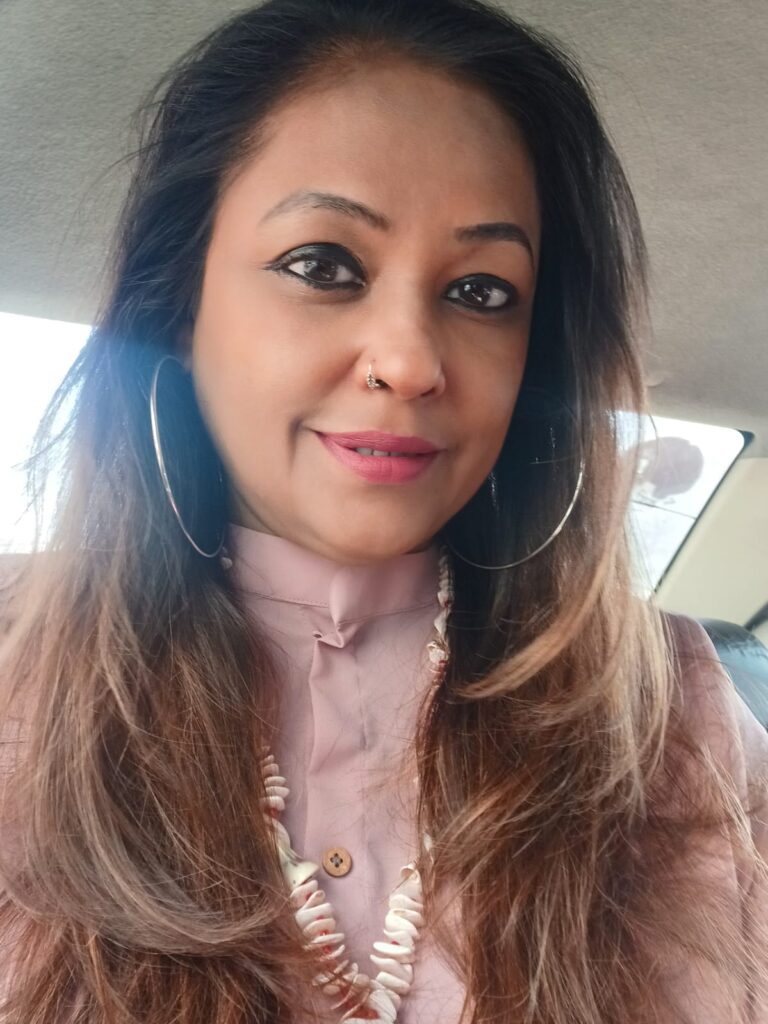
Smriti Agarwal, Founder Director, SmritiKaShikshasutra, Mumbai, Maharashtra, explains how developing critical thinking from an early age helps children become confident and capable learners. In early childhood, children begin to form ideas, ask questions, and explore solutions. Supportive learning environments nurture these skills through guided activities and meaningful interactions. Such approaches prepare children for future academic and social success.
Education in general is at a stage where we are actually looking forward to developing critical thinkers, because that is the need of the hour and part of 21st century learning. The future is highly unprecedented. We really do not know what the future holds for our children, who are right now in schools, or what the future will have in store for them, such as jobs and education. However, when we start early, that is from the early years, what we get to form is a foundation and a base where children can be more adaptable. They can be more resilient and adjust. They can have the perseverance to actually go ahead and adapt themselves to the unknown and unprecedented VUCA (Violatile, Uncertain, Complex and Ambiguous) world that we are talking about.
The year 2020, when we had COVID, changed everything. We have started believing that we can never know what is going to happen next. The jobs that we were used to are no longer available or hard to get. Artificial intelligence is taking over the entire world. With all of this in mind, we need to look at what we can do right from the foundation stage of the children. That is what NEP and NCF are also focusing on. If the foundation stage of the child is taken care of, then in the later stages, the child will develop ownership and responsibility for their learning academically and culturally, contributing to the nation in all aspects. The child would be a learner and an enabler of positive change, which is required in society.
Let us begin with Gandhiji. Gandhiji’s education philosophy, even for the early years and later stages, was very simple. He had the three H policy. That is, if in education the head, heart, and hand are involved and engaged purposefully, education actually takes place. It means that whatever learning outcomes we are looking forward to, whatever we want the child to learn, the child would learn best if the head, heart, and hands are engaged purposefully in all activities right from the early days.
We can achieve this by taking care of the fact that whenever we are planning activities for children, or planning concepts, pedagogy, or syllabus, or how we are going to teach a particular unit, chapter, or concept to a child, the main focus should be on how to design activities where they have to critically think, analyse, they have to do, and they have to reflect on their work and feelings during or after doing the activity. Feelings have to be involved. When the head, heart, and hand are involved, learning becomes everlasting. It moves from short-term memory to long-term memory in children.
On similar lines, if we look at Montessori’s education philosophy, Montessori said that the three things that should be involved in education are the brain, the muscles, and the senses. This is quite similar. If we want to nurture critical thinkers, we need to focus and work on how to develop the IQ level, that is the cognitive development, the brain, or the SEQ level, that is social and emotional quotient. We have to see that the child as a whole is involved in the learning process. When we talk about developmental domains, invariably, while transitioning into primary and middle school, we tend to forget them. Developmental domains are often considered relevant and applicable only for the foundation stage, preschool, or early years. It is true, though, that development begins right from birth, but the main factor is that these domains stay with us throughout life, even in adulthood.
Holistic human development
Cognitive development continues throughout life as we gain knowledge and learn new things constantly and that is neuroplasticity. Along with cognitive development comes social and emotional development, which helps us in all areas of our lives, not only in school or while we are students, but also in professional life. Social and emotional development regulates how we behave and how we deal with other people. Another important domain is approaches to learning, such as what is our approach towards learning and life, how much initiative do we take to achieve our goals, how productive are we in our efforts, do we have resilience, will we consider trying again and again until we get it right, if we have a growth mindset, about our communication and language skills, if we are good listeners, if we think before we speak, and if our communication is thoughtful and two-way. Communication and language development include listening, speaking, reading, and writing. A child born in a Gujarati, Marathi, or Punjabi family starts speaking that language naturally and fluently, even without learning letters or the alphabet. Listening comes first, then speaking, followed by reading, and finally writing. Writing is the last stage. However, in schools, the highest possible emphasis is placed on writing, which is not developmentally appropriate. Physical development includes gross motor skills, which involve large muscles, and fine motor skills, which involve the wrist, hands, and fingers. While educators are well aware of these, sensory-motor skills are more than often neglected. Sensory experiences such as sand play, water play, and texture exploration are very much needed, especially in the early years. Children need exposure to sensations such as hot and cold, rough and smooth, soft and hard, through exploration.
Physical and creative growth
Along with cognitive and social-emotional development comes physical development. Good physical habits developed early in life last for a lifetime. We often quote the proverb, health is wealth. If we are healthy, we can work harder and achieve more. If the body is not cooperating well, productivity is reduced significantly. Therefore, physical development, health, and well-being are essential. Health and self-care are equally important. We should know if we are teaching children self-care and healthy habits from the beginning. Many schools have started abolishing junk food and cold drinks from cafeterias, but we need to go further. Habits formed early in the children’s lives are difficult to change later in life. CBSE norms now address sugar intake, childhood obesity, and pediatric diabetes. As educators, we must address these concerns. Creative and aesthetic development includes visual arts such as colouring, painting, and printing, as well as performing arts like music, movement, dance, role play, and dramatics. Aesthetic development is about appreciating beauty everywhere, in people, nature, and surroundings. Children should also learn peer appreciation by observing and appreciating each other’s artwork, and approaches to learning include productivity, initiative, curiosity, persistence, and resilience. Many children start giving up easily and say, “I can’t do it.” Persistence and resilience must be developed gradually. A growth mindset helps children continue trying despite failures.
Development before academics
Personal, social, and emotional development is often taken lightly in schools, but it drives learning. Self-awareness comes first, followed by self-regulation and self-management. Social development includes building and managing relationships with peers, teachers, family, and society. Responsibility and leadership develop once these foundational skills are in place. Habits formed early make adolescence and adulthood smoother. As educators, we must ask very pertinent questions, such as what should be learned today when information is already available everywhere, when it should be learned, and how it should be learned. The National Curriculum Framework 2022–23 provides age ranges, competencies, curricular goals, and learning outcomes. Learning must be age-appropriate, stage-appropriate, and developmentally appropriate. For example, writing in nursery is often included, even though fine motor skills are not yet developed. Tendons and finger movements are still developing at that age. Therefore, such practices are not developmentally proper. The Ministry of Education has reduced the unnecessary syllabus to move away from rote learning towards hands-on learning and project-based learning.
Once goals and timelines are decided, the next question is how learning is best achieved. Pedagogy can be mixed and adapted. Teaching should be active, interactive, and experiential rather than passive. Children are curious and must be engaged through dialogue, inquiry and exploration. Learning should build on prior knowledge, recognizing that children come from different backgrounds and levels of understanding. Hands-on learning, experimentation, and experience should be regular features in classrooms. Information must be transformed through doing. Schools must provide resources, laboratories, and environments where children learn by doing under guidance. Retention of learning happens through implementation via projects and tasks.
Thinking beyond textbooks
Education should focus on understanding, not just knowledge. Academic knowledge must translate into intellectual application. Skills are essential in this era. Knowledge without application has no purpose. Schools must focus on developing skills across all six developmental domains, including emotional and social skills. Children are born curious. If curiosity is lost, learning becomes forced. Educators must understand children’s dispositions towards learning and foster positive attitudes. Feelings during learning are crucial. The sense of achievement and joy stays with children long-term. The Singapore International Foundation identifies learning dispositions under the acronym PRAISE: perseverance, reflectiveness, appreciation, inventiveness, a sense of wonder, curiosity, and engagement. Integrating these into curriculum and pedagogy helps develop critical thinkers, problem solvers, and responsible citizens.
Integrated learning approaches, such as theme-based curricula, need to evolve from two-dimensional content delivery to three-dimensional integration of concepts, facts, and skills. Learning should be activity-based, differentiated, and inclusive of individual learning plans. Assessment should be holistic, using observations, portfolios, journals, and self-reflection. Integrated curricula should be interdisciplinary rather than merely multidisciplinary. Concepts should be taught through multiple methods involving physical, sensory, and cognitive engagement. Themes should be age-appropriate, culturally relevant, and developmentally suitable. Scientific methods, such as observation, questioning, hypothesis creation, testing, and analysis, are effective in developing critical thinking. Simple experiments integrate science, mathematics, and language effectively.
In conclusion, when education integrates head, heart, and hand, nurtures all developmental domains, and focuses on skills, understanding, and dispositions, it produces adaptable, resilient, and thoughtful individuals. These learners become enablers of positive change, prepared to face an unpredictable future with confidence and responsibility.
Understanding different learning styles
There are visual, auditory, reading, and kinaesthetic learners. When we show them a flash or digital card, students learn better from the theme-based picture in it. They are visual learners. We should have all the resources ready for all these learners. We should have an audio clip, a story, or a rhyme for them to listen to and understand. For kinaesthetic learners, there should be some movement and hands-on activities. So tasks should be prepared for these types of students. We need to divide the classroom session of 30 to 40 minutes equally to describe the concept, and have an evaluation-based exercise the next day, so that the students can understand better. There may be special children for whom we need a differentiated learning plan based on their skills and learning abilities. Though it may look tough, we can do it easily when we look at it strategically.
Empowering special learners
For children who have less learning capacity but are interested in other hands-on activities and are good at speaking, writing is not important for them, and we need to focus on their learning abilities. We can use an iPad for them to draw or paint to explain what they know about a particular concept. Different concepts have different strategies. We can ask them questions and allow them to give answers. They can say anything they want. We need to try to see if this works out. We can give them a few questions and ask them if they know the answers to them. Once they answer, we should not stop there; with material and resources, we can test their answers. Small experiment-type questions can be used for them to form and evaluate their own hypothesis. In this way, we can develop their cognitive abilities and make them think logically. If they are attending any school, they will have all activities there. We can also try occupational therapy. They can be encouraged to speak, get articulation, and participate in activities to talk about a topic. A show-and-tell activity or a real-world problem can be given to them, make them think about the strategies, and we can also show YouTube videos. We can also take them on a small field trip with their parents’ consent and show them things. These children love to get a real-life feel and experience things. They will understand from there, and we can mix multimedia to make them learn things.
This is a summary of the talk given by the author on schoolreformer.com
Contact details
Smriti Agarwal
Founder Director: Smriti Ka ShikshaSutra
M: 7738848005
E: smritikashikshasutra@gmail.com