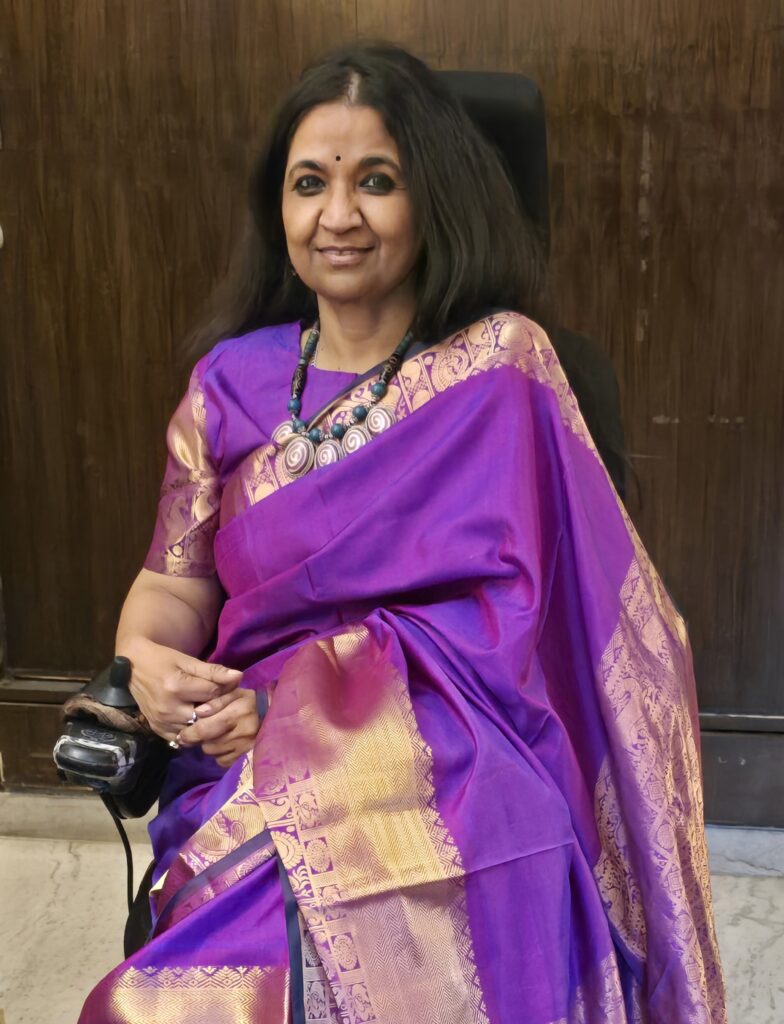
Dr Sangita Thakur, Founder of Ashtavakra Accessibility Solutions, Delhi-NCR, discusses the crucial role of education in shaping an inclusive society. She suggests strategies that educational institutions can follow to move beyond token compliance towards meaningful action.
Inclusion has long been discussed as a moral aspiration or a progressive value that institutions may adopt when circumstances allow. For many years, it was treated as a “good to have” feature rather than a necessity. However, in present-day India, inclusion—particularly disability inclusion in education—is no longer optional. It is mandated by law, reinforced by policy, and rooted in the recognition of education as a fundamental human right. All the rules and laws must be followed by the educational institutions, failing which the reputation is lost, and the media takes advantage of the situation to blow up the issue.
Educational institutions today operate in an environment of heightened awareness and accountability. Parents are increasingly informed about their children’s rights, disability legislation has become more robust, and media platforms are quick to highlight instances of exclusion or discrimination. If an institution fails to comply with inclusion mandates, it risks financial penalties, legal action, reputational damage, and sustained public scrutiny. In this context, inclusion is not simply about goodwill or ethics; it is about responsibility, compliance, and long-term institutional credibility.
Everyday inclusion challenges
The significance of inclusion becomes clearer when viewed through lived experience. With nearly three decades of experience in media and communications, including over ten years as a journalist with Hindustan Times, extensive exposure to development reporting has revealed the deep-rooted inequalities that persist across Indian society. Alongside this professional journey is the personal experience of living with multiple progressive disabilities—being deaf and having spinal muscular atrophy. Both conditions were progressive and not immediately visible during childhood. “I did not go to any special school, and I could do well in the regular system. My brother, who also has muscular atrophy, studied in the mainstream like me. This goes to show that when we have an open attitude, we can be on par with the non-disbaled children.”
Invisible disabilities often pose greater challenges, as the absence of visible markers, can delay understanding, accommodation, and support. Teachers, peers, and institutions frequently underestimate needs or misinterpret behaviour, which can lead to exclusion even within mainstream environments. As these disabilities progressed, navigating education became increasingly difficult, requiring constant adaptation, resilience, and self-advocacy.
Despite these challenges, education took place entirely within mainstream schools. There was no reliance on special education institutions. This experience was mirrored by a sibling, also living with spinal muscular atrophy, who studied in the same mainstream system. These experiences collectively demonstrate that disability does not limit potential. What limits individuals are inaccessible systems, rigid institutional structures, and deeply embedded attitudinal barriers. The laws for disabled people came into force in 2016, and the momentum is building up. People with disabilities can be a part of all educational institutions, organisations, and society.
This realisation eventually led to the founding of Ashtavakra, an organisation committed to building inclusive spaces in society. The work focuses not only on advocacy but on implementation—helping institutions translate laws, guidelines, and policies into practical, workable solutions that genuinely support inclusion rather than token compliance.
Exclusion breeds dependency
Persons with disabilities in India are often referred to as the country’s “invisible millions”. According to official documentation from the Department of Empowerment of Persons with Disabilities, under the Ministry of Social Justice, persons with disabilities are among the most marginalised groups in the country, even within underprivileged communities.
This invisibility is the result of decades of systemic exclusion from education, employment, healthcare, and public life. Many people with disabilities remain confined to their homes, interacting primarily with immediate family members or a very limited social circle. Opportunities to participate in mainstream education or employment are either unavailable or inaccessible, reinforcing isolation and dependence.
As a result, a large proportion of persons with disabilities are illiterate, unemployed, and financially dependent. This dependency fuels harmful stereotypes that portray disability as a burden on families and society. In reality, this dependency is not caused by disability itself but by the absence of inclusive systems that enable education, skill development, and employment.
When people with disabilities are denied access to education, they are excluded from employment opportunities. Without employment, they remain dependent on families for life. This places a significant emotional and financial strain on households and creates an economic burden on the nation. Individuals who could otherwise contribute meaningfully to the workforce and the national economy are prevented from doing so by systemic barriers.
Underreported disability reality
According to the 2011 Census, only 2.21 per cent of India’s population was recorded as having a disability. This figure has been widely disputed over the years. The methods used for data collection, outdated definitions of disability, lack of awareness among census enumerators, and deep-rooted social stigma all contributed to substantial underreporting. Many families are reluctant to disclose disability due to fear of discrimination, social judgment, or reduced opportunities for their children. As a result, census figures present a highly conservative estimate that does not reflect reality. More recent studies and sector-based assessments suggest that between 26 and 27 per cent of India’s population may be living with some form of disability, and even this figure is considered conservative.
Another major contributor to rising disability numbers is India’s ageing population. Disability is not limited to congenital or early-life conditions. As people age, impairments related to vision, hearing, and mobility become increasingly common. In this sense, disability is not a marginal issue affecting a small group; it is a life-stage reality that most individuals will encounter at some point.
Census data also highlights severe educational disparities. Nearly 38 per cent of persons with disabilities are illiterate, and only around 5 per cent have completed higher education. Alarmingly, the largest proportion of persons with disabilities falls within the 10–19 and 20–29 age groups—critical years for education, skill development, and career preparation. Exclusion at this stage has lifelong consequences, affecting employability, independence, self-worth, and social participation.
Inclusion: law and access
When many adults with disabilities were growing up, comprehensive disability legislation did not exist. This began to change in 2015 with the launch of the Accessible India Campaign (Sugamya Bharat Abhiyan), which aimed to improve accessibility across physical infrastructure, transport systems, and digital platforms. This momentum was consolidated with the enactment of the Rights of Persons with Disabilities (RPWD) Act, 2016. The Act has recognised 21 categories of disabilities and clearly defines the responsibilities of educational institutions. Inclusion is no longer voluntary or discretionary; it is enforceable by law.
The National Education Policy includes dedicated provisions for disability inclusion in schools, while the University Grants Commission has issued detailed accessibility guidelines for higher education institutions. These guidelines address infrastructure, curriculum design, teaching-learning processes, assessment methods, digital accessibility, campus living, governance, and monitoring mechanisms. Together, these frameworks establish that inclusion is both a fundamental right and a human right. Educational institutions are legally required not only to admit students with disabilities but also to provide reasonable accommodation that enables full, safe, and meaningful participation.
Although the RPWD Act recognises 21 types of disabilities, accessibility professionals often group them into functional categories to better understand and address practical needs. These include wheelchair users, persons with mobility impairments using aids, individuals who are blind or have low vision, deaf and hard-of-hearing persons, individuals with cognitive or intellectual disabilities, and neurodiverse individuals.
In addition, elderly persons, pregnant women, and caregivers with strollers also benefit from the inclusive design. Importantly, disability exists on a spectrum. It should be understood that two individuals with the same diagnosis may have totally different needs, making a standardised approach ineffective, and it is here that the principle of reasonable accommodation becomes essential. Institutions are expected to assess individual needs and provide the support that is appropriate, proportionate, and practically possible. Reasonable accommodation is not about unlimited demands; it is all about providing and ensuring dignity, independence, and equal participation without imposing undue burden on institutions.
The University Grants Commission’s harmonised guidelines lay emphasis on the fact that the purpose of accessibility is independence. A ramp that is too steep is not accessible if a wheelchair user requires assistance. A classroom that relies only on verbal instruction cannot cater to deaf students. A website that cannot be accessed by screen readers has no use for blind users to access essential information.
Accessibility, attitude, communication
True accessibility should allow persons with disabilities to navigate physical spaces, access information, and participate in education independently. This applies not only to infrastructure but also to digital platforms, teaching methods, assessment systems, hostels, dining areas, and recreational spaces. Partial accessibility only creates dependency further, whereas holistic accessibility enables autonomy.
One of the most common misconceptions is that inclusion ends with accessible buildings. In reality, inclusion involves addressing four major barriers: physical, digital, attitudinal, and communication barriers. Ignoring any one of these undermines the entire effort. Teachers and staff play a central role in shaping inclusive environments. If educators are not trained, sensitised, or willing to adapt, inclusion efforts will fail regardless of infrastructure. Teachers influence not only academic outcomes but also emotional safety, confidence, peer relationships, and self-esteem.
Sensitisation programmes, capacity-building workshops, and continuous awareness initiatives are essential. Inclusion must be embedded in institutional culture, policies, recruitment practices, and daily interactions. The principle of “nothing about us without us” must guide planning, ensuring that persons with disabilities are involved in decision-making from the earliest stages.
Inclusion through technology
Technology has transformed the landscape of inclusion. Assistive technologies such as screen readers, speech-to-text tools, captioning software, and image-to-text applications have empowered persons with disabilities to participate more confidently in education and public life. Modern smartphones come equipped with built-in assistive technologies, enabling users with disabilities to access information, follow classroom instruction, and communicate effectively. However, these tools are effective only if institutional digital platforms are accessible. Websites, online learning systems, digital admissions processes, and communication portals must be audited and aligned with accessibility standards. In an increasingly digital education ecosystem, digital accessibility is not supplementary—it is essential.
Inclusion: feeling and action
Inclusion is not only structural but emotional. Emotional well-being plays a crucial role in learning for all students, particularly those with disabilities. An inaccessible or insensitive environment can cause lasting emotional harm, regardless of physical accommodations. Emotional maturity progresses through four stages: pity, sympathy, empathy, and compassion. Compassion is the highest stage because it leads to action. Teachers, in particular, must operate at this level. They are role models, especially in early education, where values and attitudes are deeply internalised. When teachers demonstrate compassion and inclusion, they set the tone for the classroom and influence future generations. Inclusive education has the power to reshape societal attitudes and normalise disability as an integral part of human diversity.
Inclusion in education is no longer a matter of choice, charity, or convenience. It is mandated by law, grounded in human rights, and essential for social and economic development. As India moves forward, educational institutions must recognise their responsibility—not only to comply with regulations but to actively create environments where every learner can thrive. The question is no longer whether inclusion matters. The real question is whether institutions are prepared to act meaningfully, holistically, and compassionately. The future of education—and of society itself—depends on that commitment.
This is a summary of the talk given by the author on schoolreformer.com
Contact details
Dr. Sangita Thakur
M: 9999067869
E: sgudda@gmail.com/ sangita@ashtavakra.co.in