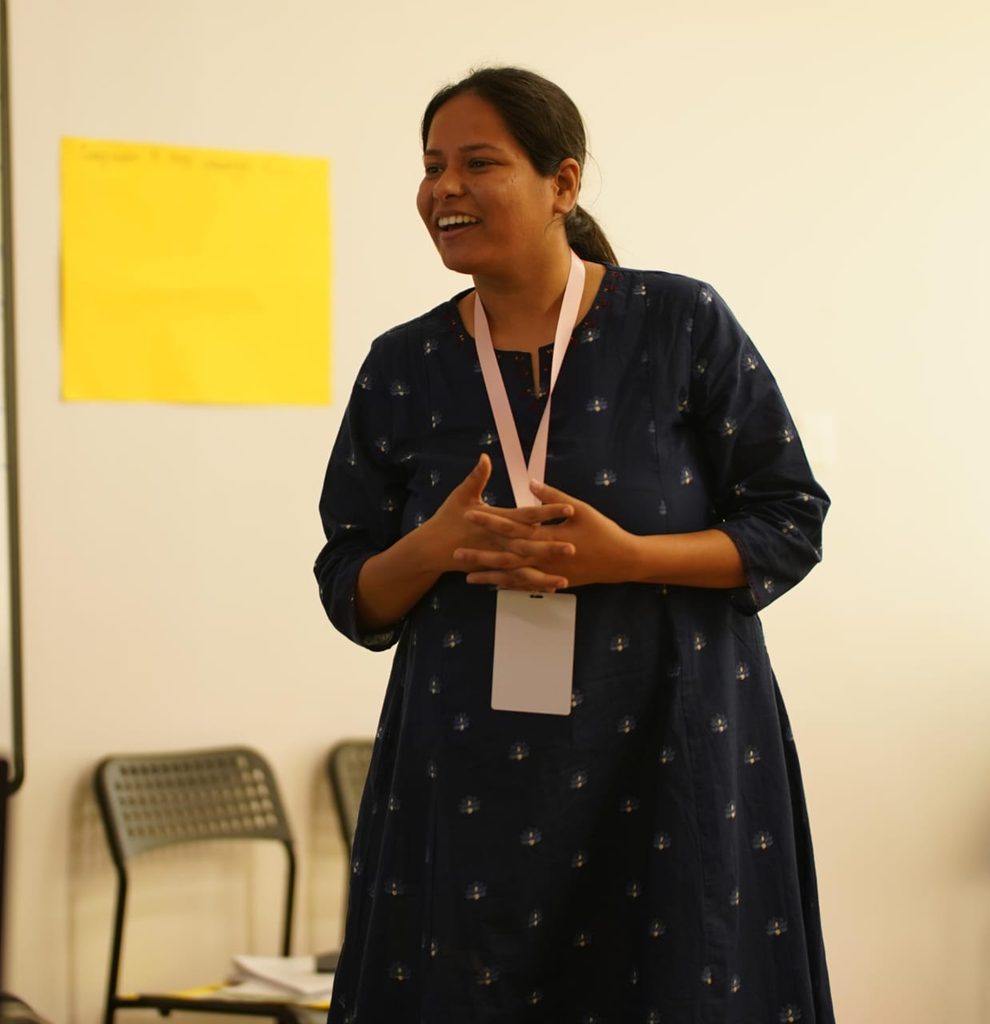
Richa Pandey, School Leader, The Sky High, Kanpur Dehat, Uttar Pradesh, explains that the true purpose of learning lies not in obedience, but in curiosity, reflection and personal growth.
From compliance to ownership
Traditional classrooms have long been based on the principle of compliance. Students are expected to follow instructions, complete assigned work, memorise information and demonstrate their understanding through examinations. This model has undoubtedly helped schools maintain order and consistency, but an important question remains: does compliance automatically lead to meaningful learning?
Increasingly, educators are recognising that genuine learning cannot be measured solely by compliance alone. Instead, meaningful education helps learners to think critically, ask questions, reflect on their progress and take responsibility for their own growth. Such learners are active participants in shaping their educational journey. This shift from compliance to ownership works on how schools can create environments where children become responsible for their own learning with teachers’ guidance and support.
Breaking the mould
Within schools, compliance translates into adult-led teaching where teachers determine what is taught, how it is taught and how learning is assessed by students completing assignments, answering questions correctly and reproducing information provided by teachers or textbooks. This approach creates highly structured classrooms with predetermined lesson plans, homework, notebooks with identical formats, and students working towards the same expected outcomes. However, beneath this order lies a critical concern. While students may complete every assigned task, they may not understand what or why they are learning, and learning becomes an exercise in meeting expectations rather than developing understanding.
Teachers assume responsibility for providing all necessary information because of a long-held belief that knowledge belongs primarily to adults. Students become recipients rather than creators of knowledge. Parents may prefer this as they judge success primarily through examination marks and believe that high scores alone indicate effective education.
When marks become the ultimate goal, curiosity, exploration and independent thinking often receive less attention. Students learn to seek the correct answer rather than asking meaningful questions, gradually becoming more dependent on external direction than developing confidence in their own learning abilities.
Limits of compliance
Compliance offers predictability. Silent classrooms are often interpreted as disciplined classrooms. Uniform work appears easier to assess, and teachers can move through the curriculum at a consistent pace. From an administrative perspective, compliance simplifies classroom management. Yet education is far more complex than maintaining order.
Students do not all learn in the same way or at the same pace. Uniform teaching methods rarely address individual interests, strengths, or learning needs, though the classroom functions smoothly. The central question, therefore, is not whether compliance creates order but whether it creates understanding.
If students simply memorise information for examinations, much of that knowledge is forgotten shortly afterwards. They may perform well academically without developing the critical thinking, decision-making and problem-solving skills needed beyond school.
The wonder of why
Ownership shifts responsibility for learning from the teacher to the learner, and students begin asking questions themselves.
These questions may initially relate to the content they are studying:
- What does this concept mean?
- Why did this event happen?
- How does this process work?
Gradually, the questions become deeper and more reflective:
- Why are we learning this?
- How is this connected to my life?
- How will this help me in the future?
- What skills am I developing through this learning?
Such questioning demonstrates genuine engagement. Students begin understanding not only what they are learning but also why it matters.
Ownership encourages learners to connect classroom experiences with their personal lives and the wider world, instead of accepting information unquestioningly. This process develops thoughtful citizens capable of analysing experiences, evaluating evidence and making informed decisions independently.
Owning the journey
Ownership changes how students view their progress. Traditionally, adults monitor student achievement through report cards, examination scores and formal assessments. Teachers record progress, discuss performance with parents and determine whether learners have met expected standards.
An ownership-based approach encourages learners to monitor their own development. Students become responsible not only for completing tasks but also for reflecting on their progress, identifying areas for improvement and setting future goals. This process transforms assessment from something done to students into something undertaken with them.
Learners begin recognising patterns in their own performance, celebrating achievements and acknowledging challenges. Reflection becomes a regular habit rather than an occasional exercise after examinations. Such responsibility strengthens motivation because students begin measuring success through their own growth and understanding.
Partners in learning
A common misconception is that giving students ownership reduces the importance of teachers. Ownership does not mean teachers withdraw from the classroom or leave children to learn independently without support. Instead, teachers become facilitators of learning. This role requires careful planning, thoughtful observation, and purposeful intervention.
Rather than delivering information continuously, teachers create opportunities for exploration, discussion and reflection. They ask questions that stimulate thinking instead of providing immediate answers. Facilitators carefully observe how students engage with learning, stepping in when guidance is needed while allowing learners sufficient independence to make decisions, solve problems and reflect on their experiences. Teachers must understand not only subject knowledge but also how to design experiences that encourage responsibility, collaboration and independent thinking.
Shared learning spaces
In a traditional classroom, the teacher typically stands at the front while students listen from their desks. Learning flows primarily in one direction.
In an ownership-based classroom, the physical arrangement itself reflects partnership. Teachers and students may sit together in circles, discussing ideas, sharing perspectives, and learning collaboratively. Learning is no longer viewed as information being transferred from expert to novice but as a shared process. Students are encouraged to express their thoughts through authentic tasks rather than standardised worksheets designed solely to produce correct answers.
Activities extend beyond factual recall and encourage students to think critically, make personal connections and consider their role within society. Similarly, reading activities encourage learners to connect texts with their own experiences and the wider world. Consequently, student work naturally becomes diverse because each learner brings unique experiences, perspectives and interpretations.
Choice builds ownership
Ownership becomes meaningful with choice as an essential feature of an ownership-based classroom. However, these choices are carefully designed rather than unlimited. The aim is not to allow children to do whatever they wish but to help them make informed decisions within a supportive framework.
One example is independent reading time, often referred to as Drop Everything and Read (DEAR), when students select books that match both their reading ability and personal interests and are appropriate to their stage of development. This simple practice develops reading skills, encourages learners to make independent choices, discover their interests, and develop the habit of reading for enjoyment. The ability to choose prepares students to make thoughtful decisions.
Ownership also extends beyond academic learning into the wider school community. Through platforms such as Bal Sabha, students regularly reflect on their experiences within the school. They discuss what has worked well, identify areas that need improvement, and suggest ways to strengthen the learning environment. The students become contributors to the culture of their school. Their opinions matter and are responsible for helping to shape the environment in which they learn.
Building ownership daily
Creating ownership requires thoughtful planning and intentional design. Ownership flourishes within carefully established routines that provide security while encouraging independence. One such routine is the daily morning meeting when teachers and students come together to discuss shared goals, reflect on previous learning, and prepare for the day ahead. These sessions encourage children to think about what to achieve, both academically and personally.
Students set goals, discuss strategies with teachers and identify practical steps towards achieving them. At the end of the day, or during designated reflection sessions, they revisit these goals, evaluate their progress and consider what they might do differently in future. These reflection cycles build habits of self-assessment, and students begin evaluating their own efforts honestly and constructively.
Another practical strategy involves reading trackers. Students record their current reading level alongside the level they hope to achieve by the end of the year. Because learners update these records themselves, they become responsible for monitoring their own progress rather than waiting for teachers to evaluate them.
Growing young leaders
An example of ownership is found in student leadership. In many schools, leadership positions such as Head Boy or Head Girl are awarded by teachers based on academic achievement or behaviour. Such appointments provide little opportunity for learners to experience democratic participation. An ownership-based approach reimagines this process.
Rather than appointing student leaders, schools organise elections. Before nominations begin, students spend time understanding the principles of democracy, the purpose of elections and the responsibilities. They discuss what makes an effective representative and how citizens make informed voting decisions.
Prospective candidates then participate in interviews before formally entering the election process. They prepare campaign materials, present their ideas to fellow students and seek support through respectful campaigning. Voting follows a structured democratic process, resulting in the selection of students for various leadership roles, including Head Boy, Head Girl, Sports Captain, Cultural Captain and other responsibilities.
Student leaders remain accountable to those who elected them. During Bal Sabha meetings, council members report on their initiatives, discuss challenges and receive feedback from their peers. Students are encouraged to question whether elected representatives are fulfilling the commitments they made during their campaigns. Students learn that leadership is about serving a community and remaining accountable for one’s actions.
Teachers as mentors
Although ownership places learners at the centre of education, teachers remain indispensable. Instead of directing every aspect of classroom activity, teachers facilitate meaningful learning experiences. During morning meetings, teachers guide discussions without dominating them. They observe interactions, encourage quieter students to participate, and intervene only when necessary to keep conversations productive.
Similarly, during Bal Sabha, teachers attend discussions, contribute their perspectives when appropriate, and mentor student leaders without taking control. Many student council members are paired with teacher mentors who provide guidance, encouragement and practical advice. Effective facilitation requires teachers to balance guidance with independence. Too much intervention limits ownership, while too little support can leave learners feeling uncertain or overwhelmed.
Finding the balance
One of the most important principles underlying ownership is the balance between agency and structure. Agency without structure can create confusion. Children without any guidance will struggle to know where to begin. Equally, excessive structure without opportunities can make learning restrictive and uninspiring. Successful ownership lies somewhere between these extremes.
Teachers provide frameworks, routines and expectations while gradually increasing student responsibility as learners develop confidence and competence. This ensures that students experience independence without feeling abandoned. Ownership therefore becomes a developmental process rather than an immediate expectation.
Learning through uncertainty
Building ownership requires schools to accept that certain aspects of traditional schooling may need to change, such as perfect silence. Classrooms where students actively discuss ideas, ask questions, and collaborate naturally generate conversation. Noise becomes a sign of engagement rather than disorder.
Similarly, uniformity in student work is no longer expected. Every learner approaches tasks differently, drawing upon unique experiences and perspectives. As a result, written work varies considerably. Ten students may produce ten entirely different essays, each reflecting individual thinking rather than a standard model answer. For teachers, this means assessment becomes more demanding. Each piece of work requires thoughtful reading and feedback.
Developing understanding, reflection and transferable skills takes longer than delivering information through direct instruction. Some topics may require additional time, while others may receive less emphasis if deeper learning is prioritised.
Ownership introduces uncertainty. Teachers cannot always predict what questions students will ask or which learning pathways they may pursue. Educators, accustomed to complete control, may feel uncertain and uncomfortable. Students begin taking intellectual risks, exploring ideas independently and developing confidence that cannot be achieved through passive participation alone.
Assessment with purpose
Assessment remains an essential component of education, but ownership changes both its purpose and its process. Students participate in evaluating their own progress through self-assessment tools and reflection sheets and are encouraged to consider their development across academic, behavioural and personal dimensions. Using structured scales, they evaluate how consistently they have worked towards their goals, identify obstacles and develop practical improvement plans. Reflection becomes a regular habit that strengthens self-awareness and encourages continuous improvement.
Traditional academic assessments continue to play an important role in preparing students for public examinations. Teachers analyse test results carefully and identify areas where additional support may be required. Results are discussed openly with students. Teachers and learners work together to understand performance, identify strengths and agree on practical next steps.
The same philosophy extends to teachers themselves. Teachers identify their own learning needs, evaluate their current stage of development and choose appropriate opportunities for professional learning. Teachers retain responsibility for directing their own professional journey, mirroring the ownership expected of students.
The courage to change
Transforming a school culture from compliance to ownership is far from straightforward. It requires educators to rethink long-established beliefs about teaching, learning and the role of students in the classroom.
The first challenge is mindset. Most teachers have themselves been educated in systems where following instructions was considered the primary expectation. Lessons were teacher-led, assessments were standardised, and success was measured largely through marks and rankings. As a result, many educators have never experienced an alternative model of learning.
Shifting towards ownership begins with unlearning. Teachers must move away from seeing themselves as the sole source of knowledge and instead recognise learners as capable of making meaningful decisions about their own education. Developing this mindset requires continuous reflection, discussion and a willingness to embrace new ways of thinking about teaching.
Next is the challenge of professional skill. Facilitating ownership demands careful planning. Lessons can no longer rely solely on delivering content. Instead, teachers must design learning experiences that encourage questioning, collaboration, reflection and independent thinking. Such planning is considerably more demanding than preparing traditional lessons. It requires teachers to anticipate multiple possibilities, adapt to students’ responses and remain flexible throughout the learning process.
The third challenge is learning to accept uncertainty. Compliance creates predictable classrooms where lessons generally unfold according to plan. Ownership, by contrast, introduces unpredictability. Students may ask unexpected questions, approach tasks in different ways or encounter difficulties that require teachers to rethink their plans.
Parents as partners
Parents play a vital role in determining the success of the ownership-based approach. Many families have experienced only traditional forms of schooling, where discipline, obedience and examination results are regarded as the primary indicators of educational success. Consequently, approaches that encourage questioning and student choice may initially appear unfamiliar or even unsettling. This makes parent orientation an essential component of the process.
Schools must communicate the purpose behind learner ownership, explaining how it develops confidence, responsibility and lifelong learning skills alongside academic achievement. In some communities, encouraging children to question ideas may conflict with expectations at home, where obedience is valued above discussion. Such differences can create resistance if schools fail to explain the reasoning behind their educational approach.
Over time, confidence grows when parents witness positive outcomes. As students demonstrate greater independence, participate successfully in wider opportunities and develop strong communication and leadership skills, families begin to recognise the value of ownership beyond examination results.
Setbacks shape success
Ownership does not imply that students always achieve the goals they set for themselves. In fact, setbacks become valuable learning opportunities. When learners fall short of a goal, the first step is not criticism but reflection.
Students are encouraged to pause and consider why the outcome was different from what they had hoped. Through conversations with teachers, they analyse the challenges they encountered and identify practical strategies for improvement.
Teachers also help students refine their goals. Broad ambitions are transformed into specific and achievable plans with clear actions and measurable outcomes. This process teaches learners that progress is gradual rather than immediate.
Goal-setting becomes an ongoing cycle of planning, acting, reflecting and adjusting. Over time, students develop resilience, recognising that setbacks are not failures but opportunities to learn and improve.
Purpose beyond pace
One concern often raised is whether ownership leaves sufficient time to complete the prescribed curriculum. The school addresses this by organising the day into clearly defined learning blocks. Dedicated time is reserved each morning and afternoon for meetings and reflection, even though this reduces the hours available for subject teaching.
At first glance, this may appear to slow academic progress. However, the goal behind this approach is that students who understand how to learn eventually become more independent and efficient learners. Time invested in building habits of reflection, self-management, and goal-setting ultimately reduces the need for constant teacher direction.
Empowering the educator
An ownership-based classroom depends heavily on well-prepared teachers. Facilitating independent learning requires ongoing professional development for both mindset and practical teaching strategies. Teachers receive extensive training focused on three broad areas: developing the belief that every child can learn, strengthening instructional skills in literacy and numeracy, and learning how to build a positive school culture. It is a continuous process rather than a one-off event.
Teachers are encouraged to identify their own developmental needs while coaches provide guidance and resources tailored to different levels of experience. A clear understanding of the purpose of ownership helps reduce feelings of uncertainty and frustration.
Modern tools, including artificial intelligence, can also support teachers by reducing the time required for routine administrative tasks such as drafting lesson plans. This allows educators to concentrate on the more important work of designing meaningful learning experiences and thinking deeply about the classroom culture they wish to create.
Ownership across ages
Ownership looks different at different stages of childhood. In the early years, young children are still developing basic habits and routines. Ownership may therefore involve simple responsibilities such as organising personal belongings, keeping learning spaces tidy or waiting patiently for their turn.
As students grow older, these responsibilities gradually expand. Middle-school learners become capable of setting academic goals, leading discussions, participating in student government and reflecting critically on their learning. While the daily routines, such as morning meetings and closing circles, remain consistent across the school, the expectations within these activities evolve according to students’ developmental stages.
The balance of responsibility also changes over time. Younger children receive greater guidance from teachers, whereas older learners assume increasing responsibility for planning, reflecting and directing their own learning.
Harmony in action
Ownership extends beyond academic learning into social and emotional development. Ownership encourages learners to become part of the solution rather than relying solely on adults to intervene. Student leaders play an active role in addressing challenges within the school community. In a particular school, with guidance from teachers, they organise discussions, awareness sessions and activities that encourage respectful behaviour and responsible decision-making on issues such as, for example, online gaming. The school also dedicated an entire month to the theme of harmony. Surveys conducted before and after these activities revealed encouraging improvements in students’ perceptions of conflict and their willingness to help resolve disagreements.
The ownership legacy
Although the ownership model continues to evolve, meaningful educational change begins not by trying to change children but by redesigning the environments in which they learn. Classroom routines, opportunities for reflection, democratic participation, student choice and thoughtful teacher facilitation all contribute to creating spaces where learners gradually assume responsibility for their own education. This transformation requires patience, consistency and a willingness to accept uncertainty. It also demands trust among teachers, students, parents and school leaders.
The implementation will inevitably vary according to context. Nevertheless, the underlying principle remains widely applicable: every school can create opportunities for students to take greater ownership of their learning, even if those opportunities begin on a small scale. It should equip young people to follow instructions, to think independently, ask meaningful questions, and contribute positively to society.
Ownership redefines them by placing learners at the centre of the educational experience while surrounding them with carefully designed support systems. When schools intentionally create spaces where students can question, reflect, make decisions and learn from experience, education becomes a lifelong journey of curiosity, responsibility and growth.
Contact details
Richa Pandey
School Leader, The Sky High, Kanpur Dehat, Uttar Pradesh
E: richapandey735@gmail.com